
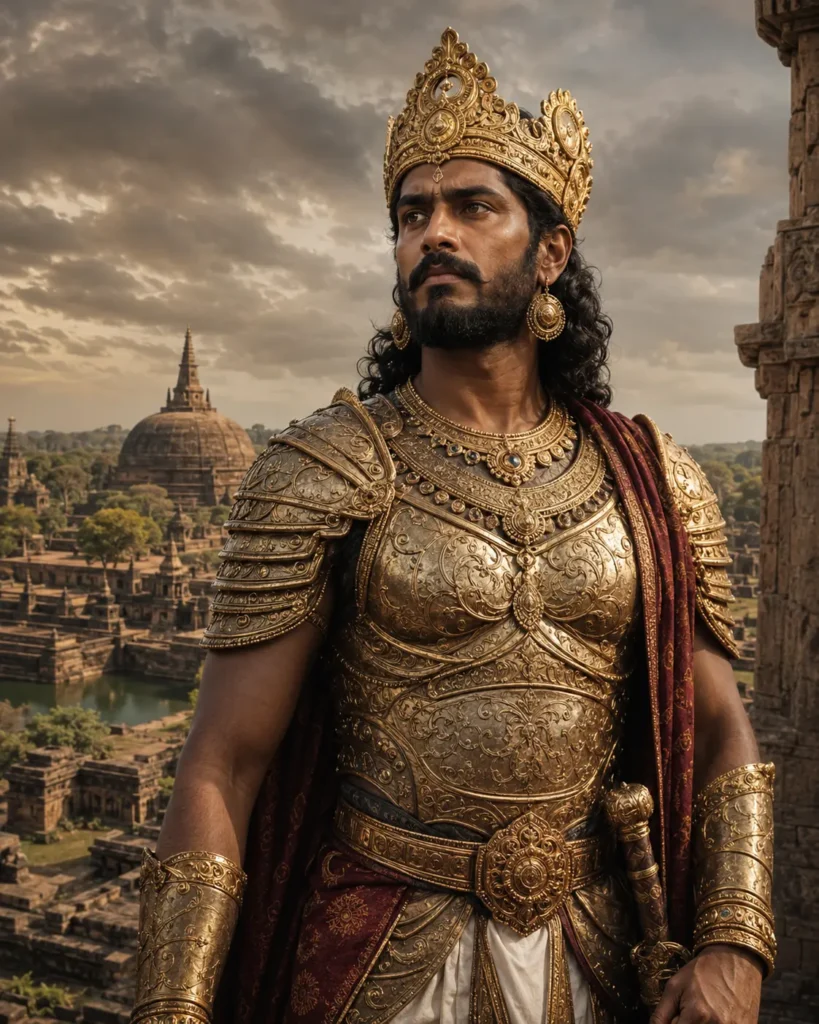
Who Was Megha of Kalinga?
Megha of Kalinga, commonly known as Kalinga Magha, was one of the most significant and controversial figures in the history of medieval Sri Lanka. His invasion of the island in the early 13th century marked a major turning point that brought political instability, widespread destruction, and profound social changes.
Although his rule remains a subject of debate among historians, there is no doubt that Kalinga Magha played a crucial role in shaping the future of Sri Lanka.
Originating from the Kalinga region of eastern India, Megha of Kalinga arrived in Sri Lanka with a powerful army and established control over large parts of the island. His invasion weakened the existing Sinhalese kingdoms and contributed to the decline of Polonnaruwa as the island’s political center.
Today, Kalinga Magha is remembered as one of the most influential foreign rulers in Sri Lankan history, and his actions continue to be studied by historians seeking to understand the political and cultural transformations of the medieval period.
History of Megha of Kalinga
Kalinga Magha invaded Sri Lanka around 1215 AD with a large force believed to have included thousands of soldiers from India. At the time, the island was already experiencing political instability due to internal conflicts and weak leadership.
Taking advantage of these conditions, Magha captured the Kingdom of Polonnaruwa and established himself as ruler. His rise to power marked the beginning of a difficult period in Sri Lankan history, characterized by warfare, political fragmentation, and population movements.
Historical chronicles describe his reign as harsh and oppressive. Many local rulers were displaced, and several important religious institutions suffered during this period.
The Invasion of Polonnaruwa
One of the most important events associated with Megha of Kalinga was his conquest of Polonnaruwa, which had been the capital of Sri Lanka for centuries.
After securing military control, Magha established his authority over the kingdom and stationed troops throughout the region. The invasion weakened the administrative structure of the kingdom and disrupted traditional systems of governance.
As a result, many Sinhalese nobles and Buddhist leaders fled to other parts of the island, particularly the southwestern and central regions, where resistance movements gradually emerged.
Impact on Buddhism
The reign of Kalinga Magha had a significant impact on Buddhism in Sri Lanka. Historical records indicate that many monasteries and temples lost royal patronage during this period.
Several Buddhist institutions were abandoned or damaged as political instability spread across the island. Monks relocated to safer areas, carrying with them religious texts and traditions that helped preserve Buddhism despite the difficult circumstances.
The challenges faced during Magha’s rule ultimately encouraged later rulers to strengthen and restore Buddhist institutions throughout the country.
Political Consequences
The invasion of Megha of Kalinga led to major political changes that reshaped Sri Lanka for centuries.
One of the most important consequences was the decline of Polonnaruwa as the primary capital of the island. Due to repeated invasions and instability, future Sinhalese rulers gradually shifted political power toward the southwest and central highlands.
This movement eventually contributed to the rise of new kingdoms such as Dambadeniya, Yapahuwa, Kurunegala, Gampola, Kotte, and later Kandy.
The transition marked the end of the Polonnaruwa era and the beginning of a new phase in Sri Lankan history.
Military Strength and Rule
Kalinga Magha maintained his authority through military power. Historical sources suggest that he relied heavily on foreign mercenary soldiers who helped him control the territories under his rule.
His administration focused on maintaining military dominance rather than developing long-term political stability. As resistance increased in different parts of the island, local rulers gradually regained control of several regions.
Despite his military success, Magha faced continuous opposition throughout his reign, making it difficult to establish lasting unity across the country.
Timeline of Kalinga Magha
- 1215 AD – Megha of Kalinga invades Sri Lanka.
- 1215 AD – Captures Polonnaruwa and establishes rule.
- 13th Century – Political instability spreads across the island.
- Rise of Dambadeniya – New Sinhalese kingdoms emerge.
- End of Rule – Influence of Kalinga Magha gradually declines.
Historical Legacy
The legacy of Megha of Kalinga remains complex. Some historians view him primarily as an invader whose actions contributed to the destruction of the Polonnaruwa Kingdom. Others study his reign as an important catalyst for political transformation and the emergence of new centers of power.
His invasion demonstrated the vulnerability of the kingdom during periods of internal weakness and highlighted the importance of strong leadership in maintaining national stability.
The events associated with his rule influenced the development of Sri Lanka’s political landscape for generations.
Megha of Kalinga Today
Today, Kalinga Magha is remembered mainly through historical chronicles and archaeological studies. Historians continue to examine records from the medieval period to better understand the nature of his rule and its long-term consequences.
The story of his invasion remains an important chapter in Sri Lankan history and is frequently discussed in studies of the Polonnaruwa Kingdom and medieval South Asian politics.
His reign serves as a reminder of how external invasions and internal divisions can dramatically alter the course of a nation’s history.
Conclusion
Megha of Kalinga, also known as Kalinga Magha, was one of the most influential figures in medieval Sri Lankan history. His invasion of the island in 1215 AD brought an end to the dominance of Polonnaruwa and triggered significant political, religious, and social changes.
Although remembered largely as an invader, his actions played a major role in shaping the future development of Sri Lanka. The decline of Polonnaruwa, the migration of political power, and the emergence of new kingdoms were all influenced by the events of his reign.
Today, the story of Megha of Kalinga continues to provide valuable insights into one of the most transformative periods in Sri Lanka’s rich historical heritage.
Frequently Asked Questions (FAQs)
Who was Megha of Kalinga?
Megha of Kalinga, also known as Kalinga Magha, was an Indian ruler who invaded Sri Lanka in 1215 AD.
When did Kalinga Magha invade Sri Lanka?
He invaded Sri Lanka in 1215 AD and captured Polonnaruwa.
Why is Megha of Kalinga important?
His invasion changed the political structure of Sri Lanka and contributed to the decline of the Polonnaruwa Kingdom.
What happened after his invasion?
Political power shifted to new kingdoms such as Dambadeniya, Yapahuwa, and Kurunegala.