Climate and weather are important aspects of Sri Lanka’s geography. Due to its location near the Equator, Sri Lanka experiences a tropical climate with warm temperatures throughout the year. Weather conditions play a major role in agriculture, daily life, and the economy of the country.
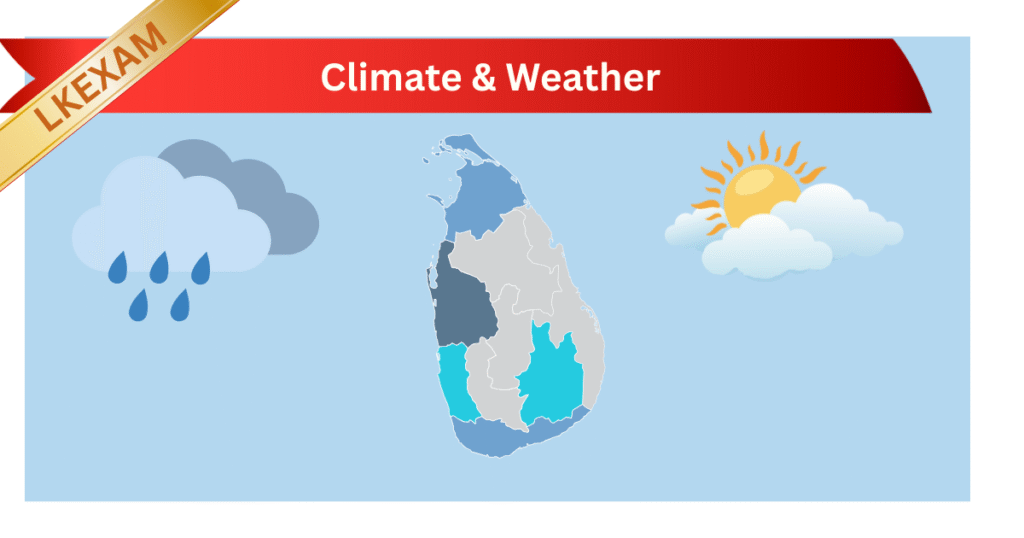
Sri Lanka’s climate is mainly influenced by monsoon winds and the surrounding Indian Ocean. Instead of four seasons, Sri Lanka experiences rainfall patterns based on monsoons. These monsoons bring rain to different parts of the island at different times of the year.
The Southwest Monsoon affects the southwestern part of the country from May to September, while the Northeast Monsoon brings rain to the northern and eastern regions from December to February. Because of this, rainfall distribution is uneven across the island.
Temperature in Sri Lanka remains fairly uniform in the lowlands, ranging between 26°C and 30°C. However, the Central Highlands experience cooler temperatures due to higher elevation. Areas such as Nuwara Eliya are known for their cool and pleasant climate.
Climate and weather strongly influence farming activities, water resources, and natural vegetation in Sri Lanka. Understanding these patterns is important for managing agriculture, disaster prevention, and sustainable development.
Climate & Weather of Sri Lanka – Quiz
Choose the correct answer for each question.
1. What type of climate does Sri Lanka have?
A. Temperate
B. Polar
C. Tropical
D. Desert
Answer: C
2. Sri Lanka’s climate is mainly influenced by:
A. Snowfall
B. Monsoon winds
C. Glaciers
D. Trade winds only
Answer: B
3. Which ocean influences Sri Lanka’s climate?
A. Pacific Ocean
B. Atlantic Ocean
C. Indian Ocean
D. Arctic Ocean
Answer: C
4. Which monsoon brings rain to the southwest of Sri Lanka?
A. Northeast Monsoon
B. Southwest Monsoon
C. Winter Monsoon
D. Summer Breeze
Answer: B
5. During which months does the Southwest Monsoon occur?
A. January to March
B. May to September
C. October to November
D. December to February
Answer: B
6. Which monsoon mainly affects the northern and eastern regions?
A. Southwest Monsoon
B. Inter-monsoon
C. Northeast Monsoon
D. Sea breeze
Answer: C
7. What is the average temperature in Sri Lanka’s lowlands?
A. 10°C–15°C
B. 16°C–20°C
C. 26°C–30°C
D. 35°C–40°C
Answer: C
8. Why is Nuwara Eliya cooler than Colombo?
A. Near the sea
B. High elevation
C. Less rainfall
D. More forests
Answer: B
9. Which area receives the highest rainfall?
A. Dry Zone
B. Intermediate Zone
C. Wet Zone
D. Coastal Zone
Answer: C
10. Which zone receives the least rainfall?
A. Wet Zone
B. Dry Zone
C. Mountain Zone
D. Coastal Zone
Answer: B
11. What causes rainfall in Sri Lanka mainly?
A. Volcanoes
B. Monsoons
C. Earthquakes
D. Ocean currents
Answer: B
12. Which season is not experienced in Sri Lanka?
A. Rainy season
B. Dry season
C. Snowy season
D. Monsoon season
Answer: C
13. Which factor causes uneven rainfall distribution?
A. Latitude
B. Monsoon winds
C. Longitude
D. Soil type
Answer: B
14. Which region has a cooler climate?
A. Coastal Plains
B. Northern Plains
C. Central Highlands
D. Eastern Coast
Answer: C
15. What is the main impact of climate on Sri Lanka?
A. Language
B. Agriculture
C. Religion
D. Population growth
Answer: B
16. Which weather event can cause floods?
A. Low rainfall
B. Heavy monsoon rain
C. Cold winds
D. High pressure
Answer: B
17. Which weather condition supports tea cultivation?
A. Hot and dry climate
B. Cold and snowy climate
C. Cool and wet climate
D. Desert climate
Answer: C
18. What happens during inter-monsoon periods?
A. No rain at all
B. Heavy snowfall
C. Thunderstorms occur
D. Strong earthquakes
Answer: C
19. Which month usually has inter-monsoon rain?
A. April
B. July
C. December
D. January
Answer: A
20. Why is understanding climate important?
A. For tourism only
B. For agriculture and planning
C. For sports events
D. For navigation only
Answer: B